Egypt To Cyprus
Israel - a Troubled Land ; Jordan - a Rosy Experience
Click here for a map of the journey.
Our introduction to Israel emphasised the country's security problems. Before we left Egypt we sent an email to our destination, Ashkelon Marina, with our ETA so the marina could advise the Navy that we were on our way. At 50nm from the coast we called the Israeli Navy as instructed on the VHF radio to advise them of our approach. On their call back 30mins later we gave them full details of boat and crew. So far so good but we were soon called again and asked to "send details to Haifa", we were unable to do this having no email onboard, nor other equipment to cover the distance required. At this point our VHF ceased to transmit so we had to endure the Navy calling us at frequent intervals through the night until finally about 12 miles off the coast, a patrol gunboat with searchlights circled us. Using handheld VHF we were able to answer their same questions once more. On arrival at the marina we were grilled quite thoroughly, albeit very pleasantly, by two young female officials. Finally we were free to checkin to the marina and find a berthing space. This wasn't difficult as the 600-berth marina was only half full. We received a clue as to why this might be as military helicopters and aircraft flew over regularly on their way to and from Gaza. Explosions were heard from time to time.
The marina staff were unfailingly helpful but in spite of that we found Ashkelon a bit of a trial. The first foray on foot took 20 mins to the nearest shopping area and was rather frustrating. ATM machines would only take credit cards, not the debit card we usually use; I did have a credit card but of course I needed the pin number which I could not remember! A visit to the supermarket (once I could identify it) was interesting, no-one spoke English, and the Hebrew script was totally unfamiliar. It took me a while to work out that I was looking at the bill upside down. Fortunately numerals are the same! A later foray further into the town by bus gave an overall view since the route taken was circuitous, passing through housing developments of various ages. It reminded me of UK "New Towns" - modern and featureless, apart from a few remnants of Roman occupation.
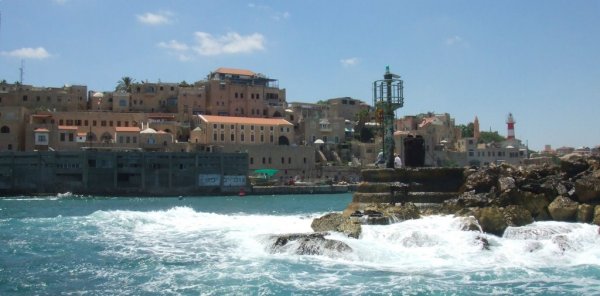
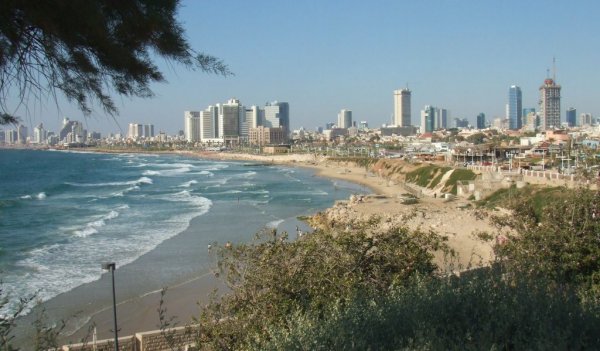
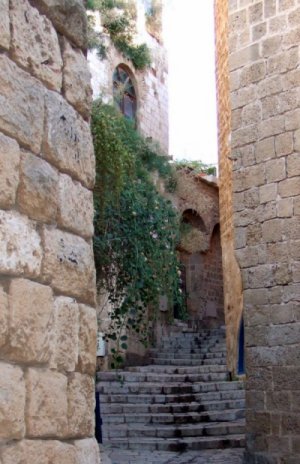
Our next port of call was Jaffa, only a few rolly miles up the coast. Having successfully negotiated the narrow channel between the harbour wall and Andromeda's Rock (with fearsome waves crashing) Barnaby skillfully steered us into a spot between local vessels in the harbour, staff did assist but it was still a tight squeeze. According to Greek mythology, the beautiful Andromeda was lashed to the rocks of Jaffa as a sacrifice to Poseidon, the god of the sea, but was rescued by Perseus riding the flying horse Pegasus. This ancient harbour, in use from biblical times, was very interesting with fishing and ferry boats coming and going. We appeared to be the only foreign cruising vessel! Jaffa itself has a fascinating history having been conquered by many over the years; the Egyptians, King David, the Romans, the First Crusaders, Salah al-Din (Saladin), Richard the Lionheart, Louis IX and the Mamluks were some of the "visitors". The first Jewish settlers arrived from North Africa in 1820. After the 1948 War most of the Arab population fled the city, which was ruined. Old Jaffa has now been substantially rebuilt and houses many artist's workshops and galleries. Wandering the old narrow alleyways you can glimpse a doorway marked "House of Simon the Tanner" and not far away a window full of Jewish jewellery, further up the hill see the Church of Saint Peter, and in the distance the al-Mahmudiyya Mosque. Jaffa and Tel Aviv are much easier for the visitor as many people speak English.
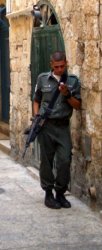
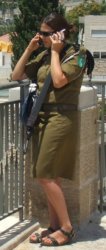
Next we took an inland trip from here to Jerusalem. Cass and Barnaby traveled by bus, staying in a backpackers' hostel near the Damascus gate outside the Old City. Jim and I went by train and chose to stay at the quaint New Imperial Hotel just inside the Old City by Jaffa Gate. The Old City holds a conglomeration of people and an examination of the map shows four distinct quarters - Armenian, Christian, Moslem and Jewish. So a short walk will reveal a colourful array of shops and peoples differing in character and dress. At first glance all appear to coexist happily, but it soon becomes clear that this is not the case. Always an armed presence reminds you that this is a nation whose security is fragile. Cass, in a group of young people travelled to Hebron, a city which is divided under Palestinian control (about 80%) and Israeli control. Visiting the Jewish settlement they were accused of being sympathetic to Arabs and had stones thrown at them. A discussion with the owner of our hotel, a Palestinian whose family history in the area goes back several generations, spoke of underhand property dealing by Jews who want to buy out all the non-Jews in Jerusalem. Everywhere in Jerusalem there are heavily armed soldiers, male and female in equal numbers, some in uniform, some not - many seemed to be about 18 years old
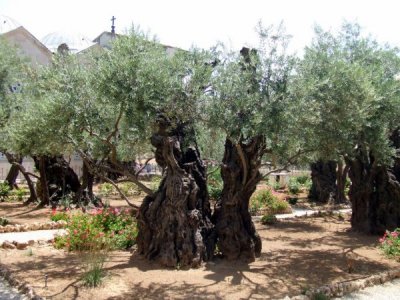
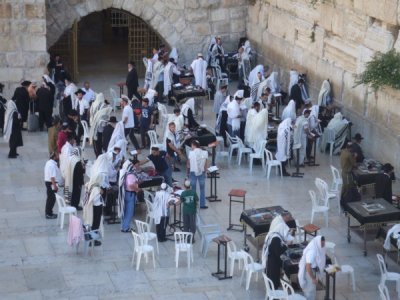
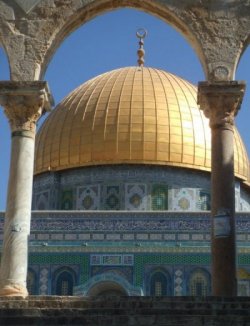
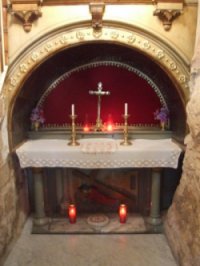
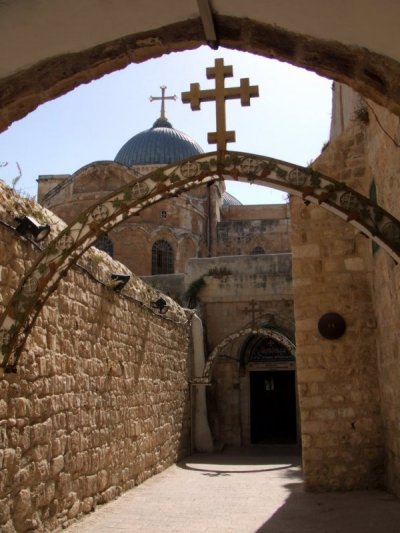
In spite of this backdrop of unease we walked the alleyways of the Old City, and sites outside the City Wall. We visited the Western Wall, the holiest site for Jewish people; the stations of the Cross along the Via Dolorosa culminating in the Church of the Holy Sepulchre where Christians believe Jesus was crucified, buried and resurrected; the Temple Mount which now has the Al-Aqsa Mosque, one of Islam's most sacred sites, and the Dome of the Rock, which houses the Foundation Stone-from which, according to tradition, the world was established. As non-moslems we were not allowed to enter the mosques. A visit to the Holocaust Martyrs' and Heroes' Memorial - the museum and site to the memory of the 6 million Jews who perished at the hands of the Nazis in World War II, was both enlightening and sobering, the memorial to children especially poignant.
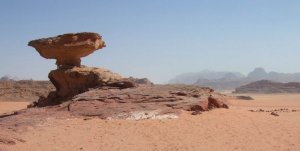
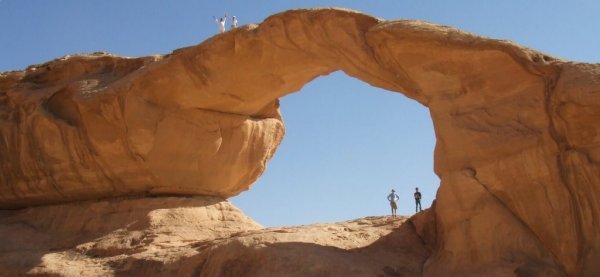
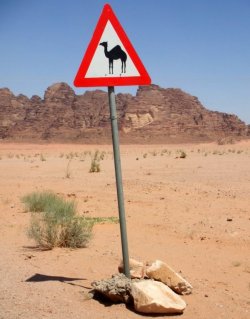
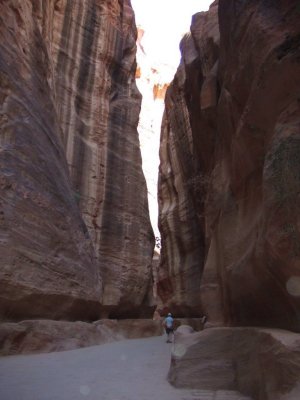
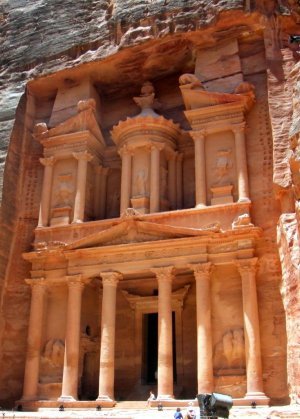
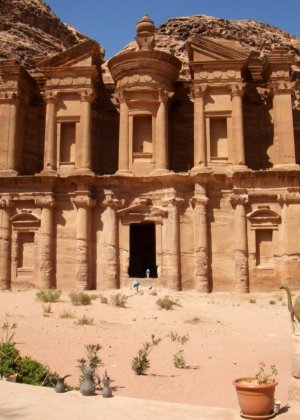
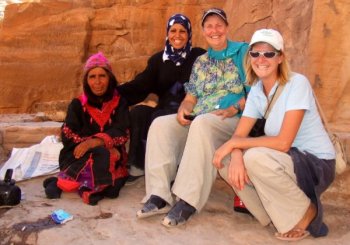
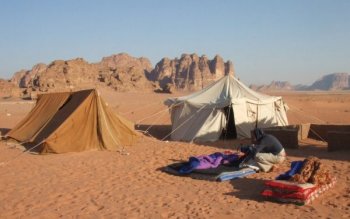
As a contrast to the teeming population of Jerusalem we headed off for a few days desert experience in Jordan. Taking the local bus to Eilat on the coast of the Gulf of Aqaba we passed the Dead Sea, the spectacular mountain fortress of Masada, and dramatic mountain formations. A short walk across no-man's land to Jordan took us to our waiting driver, Hussein, and vehicle, who took us through Aqaba and to our desert camp at Wadi Rum. A few words cannot do justice to this rose-red landscape of rippled sands and craggy wind-eroded sandstone mountains. Hard to say what we enjoyed most - the 4 wheel drive to see wind-sculpted arches; sleeping in the open, falling asleep watching shooting stars; the peaceful camel-ride to watch the sunrise; drinking local tea around the camp fire. Not to mention the remote dead city of Petra! In the words of Dean Burgon's poem "Match me such a marvel save in Eastern clime ... A rose-red city half as old as time". Petra is a huge archaelogical site, the remains of a city cut into the towering cliffs by the Nabataeans - an ancient and gifted Arab tribe who became masters of the region's trade routes, protecting caravans and levying tolls. With their wealth they created a powerful kingdom throughout the greater part of Arabia. Remains can be seen of the tombs, temples, paved roads, market-place, theatre. As you enter through the As-Siq - a long narrow winding canyon - you are almost enclosed by the towering cliffs with strange geological formations, together with votive-niches and water channels cut into the sandstone. Emerging into the sunlight after 1200 metres the 43m high facade of Al-Khazneh, best known of the monuments at Petra, appears. It is over 40m high and carved out from the sandstone cliff wall, a first taste of the wonders to come. It served as a royal tomb but gets its name from the legend that a black magician concealed his treasure here. We were feeling hot and tired by the time we reached the bottom of the flight of 800 steps to reach Ad-Deir (Monastery), and elected to ascend by donkey. This was actually quite nerve-wracking as the steps often run along sheer precipices and the donkey's hooves slipped on the smooth steps even though they were unshod. It was well worth the effort though to reach another architectural masterpiece. Contrary to its name, the Deir was not a monastery, nor does it seem to be a tomb, unlike the other monumental facades of Petra. A nearby inscription seems to connect the Deir to the cult of Obodas I (96-86 BC), even though that king lived 150 years before the building was constructed. A further walk took us to the mountain-top where we could see a carved sacrificial altar, complete with blood drainage channel, set on the dizzying cliff, and a stunning panorama of the mountains stretching away and below.
All too soon we were back on the boat in Jaffa, then moving on to Herzliya Marina a few miles north of Tel Aviv. En route we saw massive swarms of "medusas", the local name for jellyfish, some white, some blue, all huge in size and enough to put anyone off swimming! Herzliya is a large modern marina with associated facilities, so we were able to catch up with the chores of laundry, stocking up on food, going to the cinema, using the wifi system for accessing the internet onboard, and finally, checking out of Israel. What a marvellous country, rich in history and culture. But were we lucky to leave when we did as the Israeli Army launched their attack on the Gaza strip shortly after we left.
Cyprus
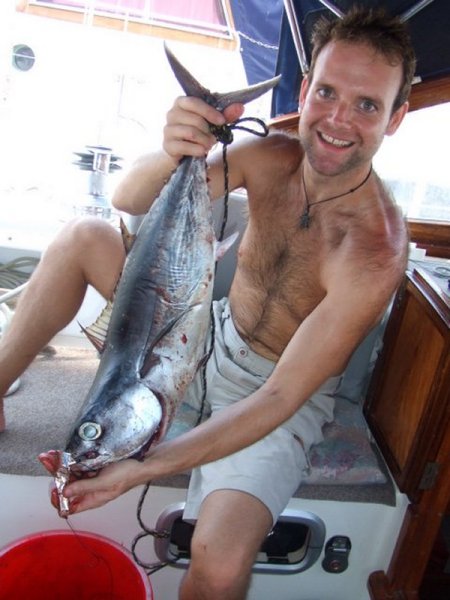
On Cassandra's last sea voyage with us, striped dolphins came to visit us on our way to Southern Cyprus; then, true to form, Barney "the Fishmonger" landed a tuna as we made the approach to Paphos Harbour. We were directed in and squeezed between boats that appeared to have been there a very long time judging from the marine growth on their bottoms. The Harbourmaster had mentioned something about having to wait for the big boat to move and we realised what that was all about when "Wave Dancer I", a 25 metre party boat, pulled in right behind us, effectively trapping us there. Still, we weren't planning to move for a while, and we enjoyed their onboard music and Greek Dancing displays!
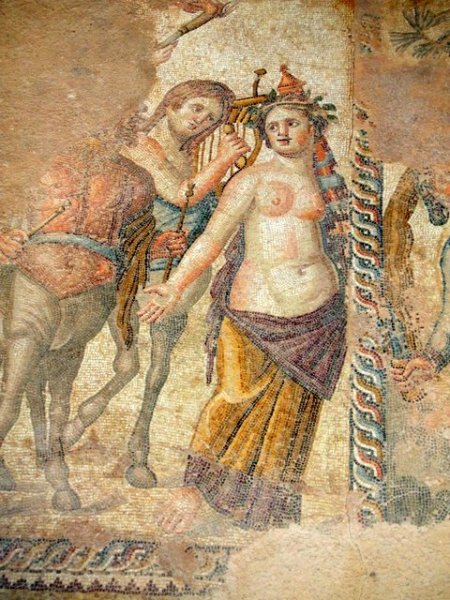
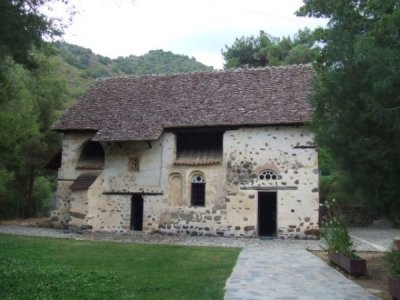
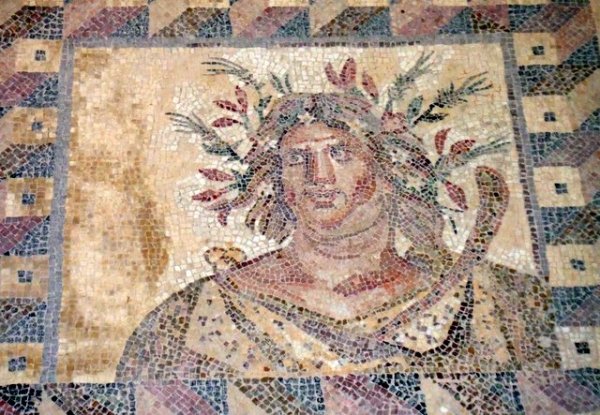
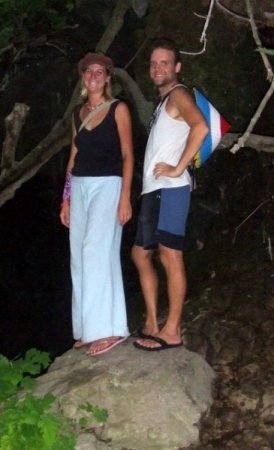
We discovered we were definitely back into "home" territory. Brits were in abundance - sporting big beer bellies (the men) and more than enough sunburnt flesh (men and women). The World Cup was in full swing, with bars advertising their big screens, sausage and chips, all-day "full English breakfast", and all other manner of inducements to sample their hospitality. This was not what we were expecting so we managed to avoid most of it and see the lovely Roman mosaics instead. We hired a car to drive up into the mountains to see the Agios Neofytos Monastery and hermitage, before going onto the town of Polis on the north coast, a quick dip in the sea at Latchi and we were ready to visit the natural grotto where according to legend the goddess Aphrodite used to take her beauty baths.
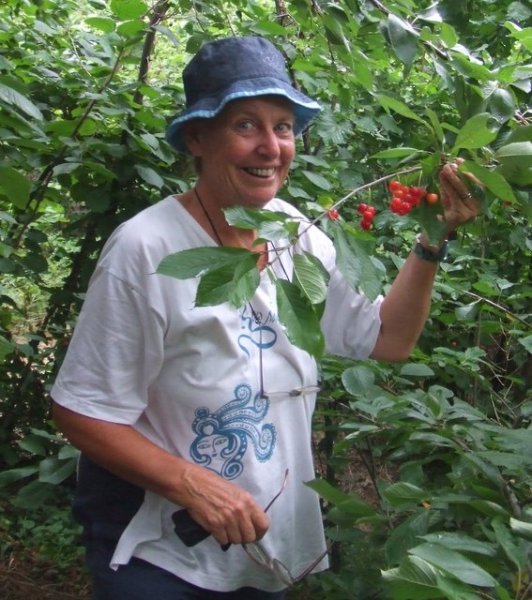
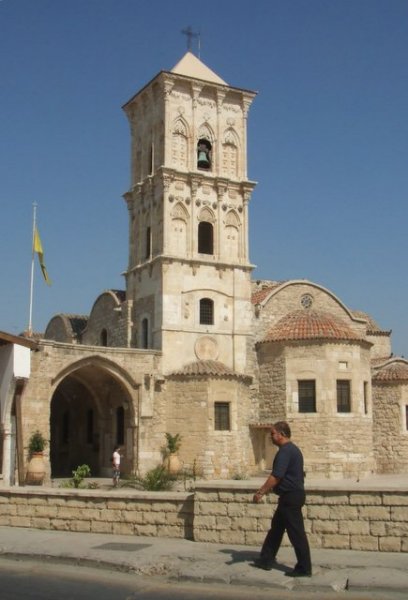
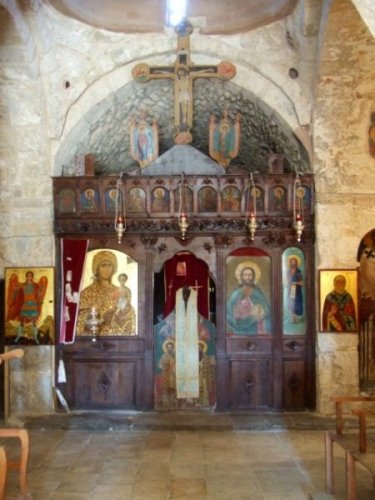
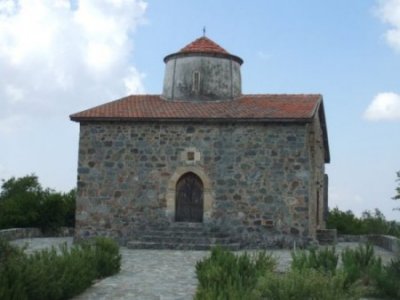
It was time for Cass to fly home from here and after we saw her off Barney decide to sample the delights of Ayia Napa, Cyprus' busiest beach resort. On the way we stopped for a night in Larnaca, thus enabling us to have a memorable Italian meze meal, consisting of 10 courses, all of which were delicious. Next morning we visited the 9th century Church devoted to St Lazarus, who is believed to have lived at nearby ancient Kition for 30 years after his resurrection by Jesus Christ. Having dropped Barney to enjoy the fleshpots and foam parties, and fixed the puncture we had acquired driving round the stoney roads of Cape Greko, Jim and I headed for the peace and cool of the Troodos Mountains. There we stayed for a few days soaking up the peace and quiet. We stayed in inexpensive pensions and enjoyed meeting the Greek Cypriots. We also saw more World heritage listed Byzantine chuches and monasteries than you can shake a stick at! All in lovely mountain settings and adorned with wonderful frescoes and icons. One beautiful 2 hour walk along a rocky river valley took us ambling through orchards of hazelnuts, plums and cherries in such abundance that we were forced to sample them, and we saw not a soul. We also enjoyed another walk along the Artemis trail round Mount Olympus with spectacular views over the neighbouring mountains, spotting hoopoes and wheatears along the way, and passed only a couple of other walkers. It was even more gratifying that we finished the walk literally two minutes before the heavens opened: rain deluged down for hours and the minor roads we drove down after it had abated were tricky to negotiate with many rockfalls along the way. Back in Paphos we discovered the delights of Debenhams, notably bacon, which had been sadly missing from our diet - so the influx of British people to Cyprus has some good points! Unfortunately the down side is that there is massive building of terraced housing in many locations, blighting the scenery.
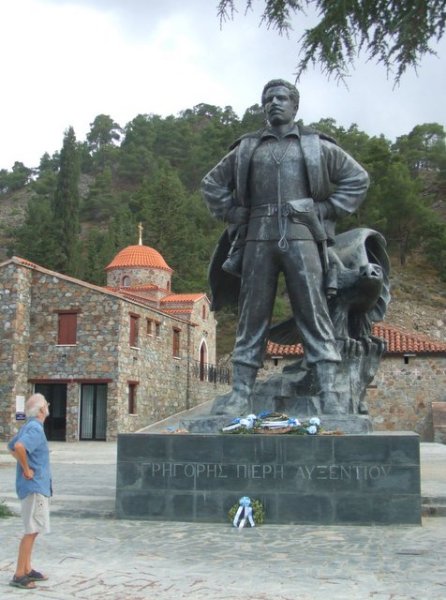
Lack of time prevented us from visiting Northern Cyprus and learning the Turkish Cypriot point of view concerning this divided island but we were left with some abiding impressions of Greek Cypriot attitudes. We spoke to several Cypriots who were vociferous about the hated Turkish occupation of Northern Cyprus but who conveniently forgot that the Turks arrived in response to an invasion by the Greek army and the racial murder of Turkish Cypriots. Greek Cypriots like to fly flags but for every flag of Cyprus we saw there were two or three flags of Greece, sometimes both were flown together, a large Greek and a small Cypriot on large and small flagpoles respectively! Why would an independent nation fly another nation's flag above their own? We also saw a number of memorials and heroic statues, some erected very recently, in memory of fallen members of Eoka, many Britons of course remember Eoka as a terrorist organisation which deliberately targeted British cvilians during the struggle for independence. Somehow we did not get the impression of a people who were ready for reconciliation and we suspect there will be trouble in Cyprus for many years to come, there were after all 65,000 Turkish Cypriots and 180,000 Greek cypriots displaced when the island was partitioned and many, naturally enough, still want their homes back! The best hope may lie with the influence of the European Community, now that South Cyprus is a member and Turkey is in discussions to join.