Australia Part 1
New Caledonia to Bundaberg
Our voyage from New Caledonia to Australia was enlivened by catching our largest mahi-mahi to date - about 5ft.3in long and estimated weight of 50lbs. We decided we had only landed it because it was in an enfeebled state due to a bite taken out of each side: our ship's library helped us to identify these as made by the cookie cutter shark, which has the nasty habit of having a quick munch on a passing fish.
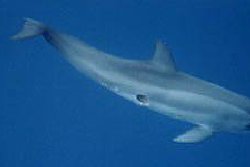
Ed: A dark patch below the jaw of the cookie cutter shark fools predatory fish such as tuna, mahi-mahi and obviously (from the photograph) dolphins. Viewed from beneath, the pale underside of this small shark blends with the light from the sky above and disguises its outline. Against the pale glow, the dark chin patch looks like a small fish. The predator snaps at the "fish" but is then bitten by the smaller predator (the shark). This injury (on a dolphin's side) was caused by this shark.
Just as well we caught fish as the journey took us 10 days. We managed to have all conditions and directions of wind, from no wind to 40knots against us, so we hove to on several occasions to avoid bashing into the uncomfortable seas. As we neared the coast we even had current against - were we welcome in Australia? The answer of course was "yes". About 200 miles off the coast we had our first Australian exchange - we heard an Immigration spotter plane calling a yacht on VHF and thought perhaps it was us. It wasn't but "we have you on radar" was the response, which was a very comforting thought. We made it into Hervey Bay on a Sunday morning and called into the Volunteer Marine Rescue Service concerning our arrival at Bundaberg.
Ed: Hervey Bay is located on Australia's East Coast, about 250km north of Brisbane. Fraser Island is situated on the eastern side of the bay, and is about 150 nautical miles in length, with the Breaksea Spit extending another 25 nautical miles north.
The man on duty was more than helpful: we had the wit to check if there was an extra charge for a Sunday arrival, which he confirmed. He further suggested that should we be moving very slowly we might time our arrival for just after 17.30 when Customs and Immigration would have gone off duty, that we should anchor by the Customs buoy and we would then be able to check in first thing Monday morning. So we did just that, and early on Monday November 3 officially entered Australia and moored at Bundaberg Port Marina, Queensland.
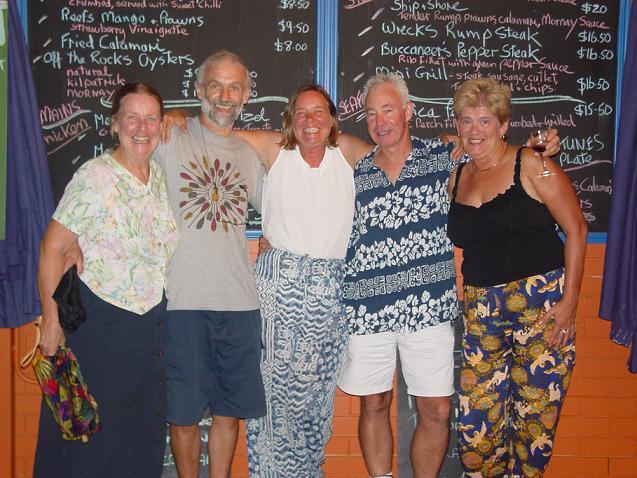
Like the curate's egg, this period has been good in parts - both marinas good, time on the hardstand at Port Bundaberg a stressful and expensive experience. Customs and quarantine clearance are carried out at the smart new Port Bundaberg Marina and for us this was quick and easy. Customs and Immigration were very pleasant and efficient. We had previously thrown several items of food out that we knew were not allowed, and organised the rest for easy inspection by Lesley, the Quarantine lady. She found a few items of basketry that needed treatment: these were put in a black bag, sprayed against insects and left overnight. Otherwise our only casualties were some (chicken) feathers from Vanuatu, and a dreamcatcher containing feathers that we had brought from UK! Our arrival at the marina was rather timely as boats in the annual "Port 2 Port" Rally from Port Vila in Vanuatu had recently arrived, and celebrations were still in full flow. We joined in the trip round the rum distillery (Bundaberg styles itself "Rum City"), buffet lunch and Rosie entered the Melbourne Cup Day's 'most amazing hat' competition (and won). The marina itself is very pleasant, lying quite close to the mouth of the Burnett River. The shower, laundry and restaurant facilities are very good, there is a daily courtesy bus to and from town, a free barbecue lunch on Friday, trip to the Shalom Market on Sunday morning, video and meal deal at "Baltimore's" restaurant each Monday.
Soon after we arrived in November we hired a car and traveled down to Brisbane to visit friends we had made the year before when they had been sailing across the Pacific on their yacht "Moonwalker". Doris, Erwin and son Alexander made us very welcome and showed us some of the city's sights. We took various catamarans and ferries criss-crossing the River and walked part of the city centre, through South Bank Parklands (the site of Expo 88) where an artificial river and sandy beach make an ideal recreation area for families. Whilst in Brisbane and on the way back we checked out various marinas and boatyards with a view to the work we needed done on the boat. In the end we chose to stay at Bundaberg Port and the next month found us removing sails, equipment, fittings and finally teak from the deck prior to dealing with the rust and having the deck painted. Good points of this marina include: a large number of marina berths and good facilities; friendly helpful staff; chandlery, fresh fish shop, restaurant - also some basic supplies (bread, milk) available from here; free barbeque each Friday lunchtime; courtesy bus to town (10 miles) with special rate on public buses for return; courtesy bus on Sundays to an excellent local fruit and veg market; the hotel at Burnett Heads provides good value meals and a courtesy bus service to and from marina on request; some good services on site - we were especially pleased with the diesel engineer at Marine Torque, Dennis Engineering. Jim the Welder and Bevan of Captain Canvas also did some small jobs quickly and well.
We were safely hauled out at Bundaberg Port on 15 December 2003 and returned to the water on 28 May 2004, disappointed by the work done there and considerably behind schedule. The hardstand supports a good deal of work on local trawlers. It is a good if you just want to park your yacht for the cyclone season, or if you want to work on your yacht (you can use people of your own choosing from outside the yard though Bundaberg is the nearest likely source). Our main reason for choosing Bundaberg Port was our need to sandblast and paint the hull and parts of the deck of our steel yacht. The time and cost estimate we were given proved inaccurate and we were not impressed by the skills and yacht experience the yard staff demonstrated. We had to pay more than expected, doing a large part of the work ourselves (not originally intended) and the outcome did not meet our expectations. With hindsight we should have expected delays due to the Christmas festivities, and we were unlucky with the weather, but even so..... On the plus side we stayed with two local families during this period and they were kindness itself, as well as giving us the opportunity to experience the Aussie lifestyle at close hand. This ranged from nasty (imported) cane toads and beautiful indigenous green tree frogs in the gardens to sampling good Aussie tucker at an Australia Day party - snags on the barbie and homemade damper!
Our recent move to the Midtown Marina has given us a different experience (including running aground coming upriver - watch those leading lights!). Good points of this marina include: friendly, helpful staff; better stocked chandlery and greater willingness to order what's not in stock; immediate access to town centre with post office, internet cafes, inexpensive eating places, supermarkets, bottle shops etc.; amazing variety of bird life on the river; Moncrieff Cinema close by.
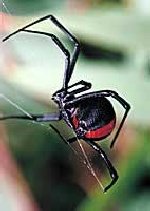
Ed: Rosemary mentions finding a Redback Spider "not on the toilet seat but on the anchor rope, and fortunately dead". She said she was thinking of spraying out the anchor locker in case there is a great nest of spiders in there. The reference to the toilet seat is taken from a well known song "The Redback on the Toilet Seat" written by Slim Newton in 1972. "There was a Redback on the toilet seat when I was there last night. I didn't see him in the dark but, boy, I felt his bite". The Redback is one of Australia's poisonous spiders, it occurs widely and has a nasty bite. More than 200 Redback Spider bites requiring antivenom are reported every year.
Jim reports finding a mudwasp's nest inside the boom "full of pupating larvae and spider skeletons" - let's hope that mudwasps eat redback spiders as well.
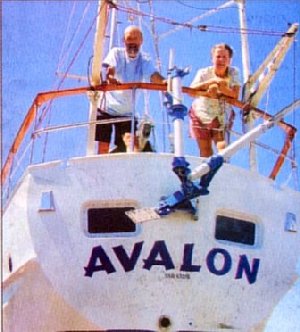
We have now completed the deck painting ourselves, and had an excellent shipwright finish off what wasn't done at the port boatyard; fitted new chain; had the anchor regalvanised, bought a new liferaft etc. Its time to head north to the Whitsundays. Our timetable has been reorganised again with the delay here: instead of leaving for Indonesia this year we will do it about a year from now, spending the next cyclone season travelling around this huge country. Not got the campervan yet but we guess "she'll be right mate"!
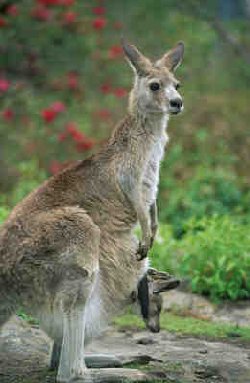
On December 13 we took possession of our hire car again, and moved into a local lady's garden-room as we could not live on the boat whilst having sandblasting and painting done. On December 15 the boat was hauled out onto the hardstand with the expectation of the main work taking about 8 days. It is now 9 February, exactly 8 weeks later and the deck painting is still not completed. The tale is not a happy one and is as yet unfinished, so enough of that now! Our enforced stay on land in this small town area of Australia has had many positive results. We have been able to experience the Australian way of life at close quarters and have found the people of Bundaberg very friendly and hospitable. First, we stayed with Judy, husband Leon, and Duke the dog (who has the very pleasant habit of licking legs), then, when the arrival of relatives meant we had to move on, at Sue's. We live in with the family, Sue and 2 daughters, though Emma has since returned to Brisbane to University. On Christmas Day we were invited to lunch by another couple, Ivan and Rosina, who live in the countryside just south of Bundaberg. Along with their other guests we enjoyed roast turkey, ham, barbecued prawns, salads, followed by pavlova, cheesecake, cake and chocolate rum balls. Delicious! In early evening we saw kangaroos not far from their house and on the side of main road back waiting to cross, a snake.
Rosie and Jim are currently in Bundaberg, oz, where they are enjoying the summer sun. Apart from popping a few shrimps on the barbie with the locals, they are working on the boat to de-rust it - this seems to be a process which involves some hard labour, having the boat out of the water, and will likely take some months. It appears that despite the hard work they are quite capable of enjoying the east coast of oz in the summer - champagne and strawberries on the beach for christmas
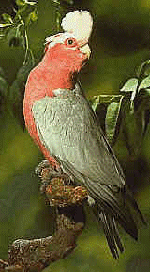
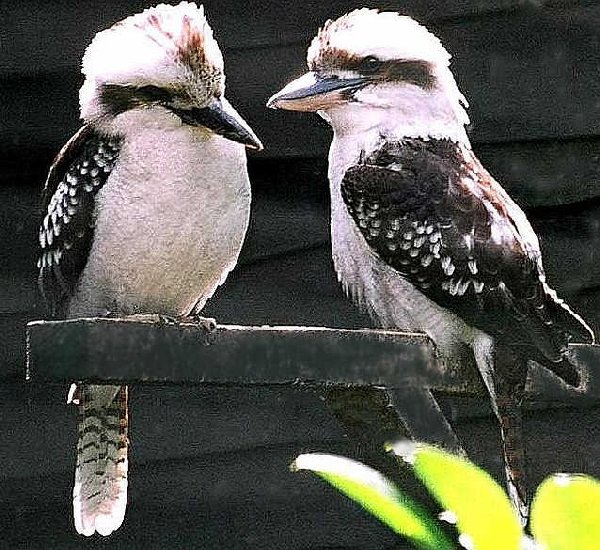
There is wildlife in abundance here. During the daily drive from Bundaberg to the marina (about 15km) the area we pass through is mainly farmland - sugar cane and various seasonal vegetables, with some patches of scrub and freshwater pools. We invariably see a variety of birds: the colourful lorikeets squeaking as they dart by, small groups of pelicans in ponderous flight, on one windy day a vast group of bright pink and grey galahs ambling on the roadside, ibis, spoonbills and stilts at the ponds. On our first day from the boat we saw a huge eagle flying with a snake in its claws, and the day we went to the turtle sanctuary a screaming flock of black cockatoos wheeled overhead. And I musn't forget to mention the kookaburras with their maniac laughs which have woken us up in the morning.
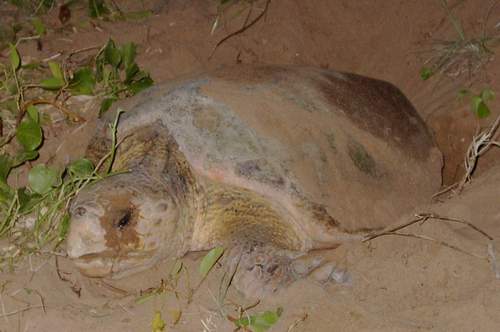
Whilst sailing we have not actually seen many turtles so made an effort to go to "Mon Repos Turtle Rookery", where the Queensland Parks Wildlife Service monitors marine turtle activity, and ensures visitors respect the wildlife by guiding groups each night during the laying and hatching season. After some hours' wait we were able to watch a loggerhead turtle labouriously excavate a nest in the sand dunes, lay her eggs (on average 120) carefully bury them and then return to the sea. Later the same night we watched as a ranger examined a nest (which had recently hatched) to find out how many eggs had hatched and why the others had not; a nestling which had hatched but become entangled in the grass roots was freed and we watched it struggle to the sea. Later the same week we visited the beach on our own in the early morning and were able to see the tracks of 4 turtles which had come ashore the previous night to lay eggs.
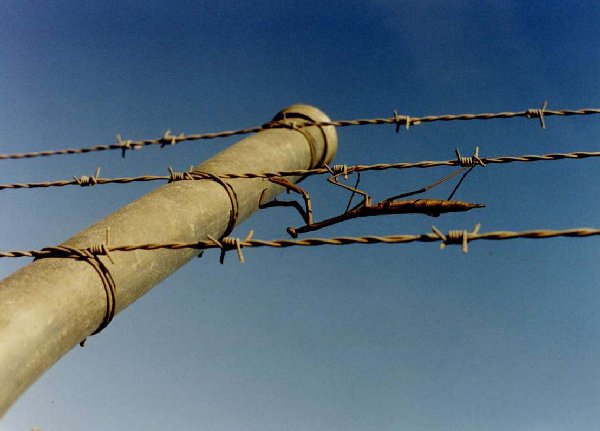
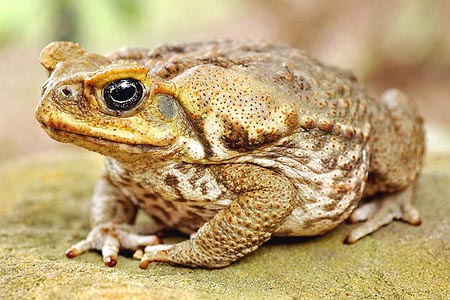
But it is not necessary to make a special effort to see the local fauna. In the boatyard we have watched a large lizard (about 40cm long) sunning itself, a praying mantis on the barbed wire fence, a brown snake near the marina restaurant! One day Jim was below deck when about 40 bees came flying in - he persuaded them to leave with a spray; later we discovered a swarm had formed on a palm branch just outside the marina office and been taken away by the local beekeeper. In fact there is a feeling of being the interloper here; depending on the weather, its a battle against the ants, mosquitoes, flies and sandflies. One particularly rainy night we heard a new croaking sound in the garden - Sue was thrilled to find baby green frogs; she had acquired some adults of these native frogs last year for her garden and this was the first sign that they had survived and bred. This is in contrast to the cane toads which were introduced and are now a huge pest; rather like the possums in New Zealand, they are commonly sighted as road kill victims.
The weather at sea is always an important factor for us compared to our previous land-based life. But here, in the summer cyclone season, it has taken on a new significance on land, slowing work through high temperatures, preventing work on the boat through strong winds and torrential rain. Last year the January rain tally for Bundaberg was 1.2mm; this year it was 225mm. Just our luck! But then last year there were fires...outside of the main cities this is not a country for the faint-hearted. But the rain and sun mean that vegetation flourishes. When we first arrived in November rock melons were at their peak and could be bought from roadside bins for about 15p each; now in February the main local fruit crop is mangoes - so far we have only tried 4 varieties - Bowen, Valencia, Java, Strawberry, all yummy! The local Sunday market at Shalom College is a must for local produce - tomatoes, lettuce, zucchini, aubergines, pumpkins, bananas, pineapples and, in time for Valentine's Day, passionfruit. The other local culinary delight is the fish: from barramundi and shark to the huge tiger spot prawns and bugs (like small lobsters). No wonder we don't see many sylphlike figures here. Of course the very acceptable wines and cool refreshing beers (after a hard day at the boat yard) don't help the waistlines.
Australia Day (January 26) was celebrated at Sue's house with a party. Rosie is well acquainted with the local 'op shops' - Salvo's (Salvation Army) and Vinnie's (St Vincent De Paul), so we had no trouble kitting ourselves out with appropriate bush hats and shorts. Armed with gum branches (as instructed) and snags for the barbie, we entered into the swing of things with a few beers. Rosie felt inspired to create a quiz, the answers (gleaned from the internet) to which caused much controversy amongst the other guests "who is this pommie telling us things about Australia we don't agree with?"
And so we are getting to grips with the customs and language: when in doubt abbreviate - G'day mate, see yous this arve, goodonyer etc We've grappled with the paperwork to get our Medicare cards and been to the medical practice which deals with 'bulk billing' (so we dont pay for an appointment just the medicine); Rosie's been to the dentist and spent a small fortune on saving a tooth, in fact we're settling in nicely.
But we're still looking forward to a trip back to "the Old Country" in March!!
 top of page